Hybrid team, long lease? A guide to flexible office terms
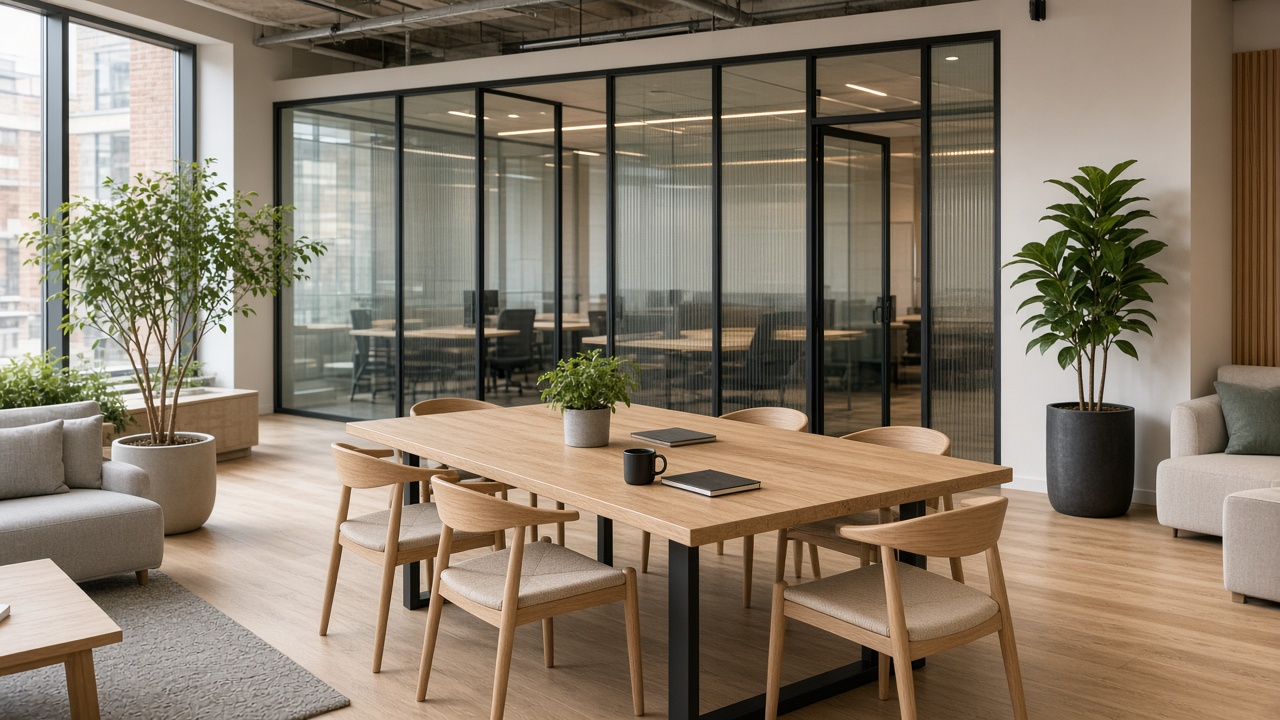
How flexible office licences and shorter commitments help hybrid teams avoid paying for empty desks, and the key terms to check before you sign.
By FlexWorkspace Team
Monday morning: three desks occupied. Wednesday lunchtime: people perched on the kitchen counter with laptops looking for a spare socket. Friday afternoon: the floor is quiet enough to hear the fridge hum. Meanwhile, the lease in the filing cabinet has five years left to run, at the same size and the same fixed rent. If that sounds familiar, the problem usually is not your hybrid attendance policy. It is the property agreement underneath it.
Hybrid working rarely struggles because people dislike spending time with their colleagues. It struggles when a business is locked into a rigid footprint designed for five-day attendance while its actual week ebbs and flows. This guide explains how flexible office terms work, how to size your space around your real week, and what to check in the paperwork before you sign.
Why traditional long leases clash with hybrid teams
A conventional five- or ten-year commercial lease assumes you know what your headcount and working pattern will look like years in advance. If you size the floorplate for every employee to have a permanent desk five days a week, you pay rent, business rates and service charge on rows of empty chairs on Mondays and Fridays. If you size it too tightly to save cash, mid-week anchor days become noisy and cramped, and there is nowhere private to hold a client call.
Wait for a three- or five-year break clause to fix that mismatch and you either absorb dead-weight property costs or squeeze your team into a layout that stops working. Flexible workspace agreements are built to close that gap.
How flexible office licences and shorter commitments work
Instead of signing a long lease directly with a landlord and taking on separate liabilities for fit-out, business rates, utilities, maintenance and dilapidations, most flexible offices are taken on a licence or short agreement with a workspace operator. Minimum commitments typically run from one month up to two or three years, with the workspace furnished, connected and ready to use from day one.
Because the operator runs the building as a whole, your monthly fee usually bundles rent, business rates, service charge, utilities, high-speed Wi-Fi, cleaning and reception support into a single predictable figure. Just as importantly, you gain access to shared amenities in the building that would sit idle for most of the week if you built them inside your own private lease.
Right-sizing around your mid-week peak
For most hybrid businesses, Tuesday to Thursday is when teams come together to collaborate, run project kick-offs and onboard new starters. Rather than paying year-round for a private floor large enough to hold your absolute maximum headcount plus three permanently empty boardrooms, you can structure your setup around how the week actually runs:
- Size your private office for your typical mid-week attendance. Use desk booking or shared neighbourhoods so the core suite stays busy without feeling overcrowded. If you are working out your numbers, the FlexWorkspace office space calculator is a useful place to start.
- Use bookable meeting rooms for all-hands days. Keep your private floorplate focused on productive desk and collaboration space, and book larger boardrooms or town-hall spaces in the building by the hour or day when the whole company comes in.
- Mix private suites with coworking passes. For remote team members or visiting staff who only come into town once a fortnight, hot-desk memberships or day passes inside the same centre can be far more cost-effective than permanent desks.
- Grow within an operator's portfolio. If your headcount rises or your attendance pattern shifts, many operators let you step up to a larger suite in the same building or move across to another centre within the operator's portfolio, subject to availability.
Five terms to check before you sign
Labels vary from operator to operator, so always read the agreement in full and check these five details before you commit:
1. Minimum commitment length
Check the shortest initial term you can sign. A three- or six-month initial term is a sensible way to test a new city or see how your team actually uses the building before committing for twelve or twenty-four months.
2. Rolling notice period
Look closely at how far ahead you must give notice to leave or downsize once your initial term ends. A one-month minimum term is less flexible than it looks on paper if the agreement requires three months' written notice linked to the end of a calendar quarter.
3. What the monthly fee includes vs extras
Ask for a clear list of everything covered in the headline monthly price and what is billed on top. Check whether meeting room credits, printing, out-of-hours air conditioning, bike storage or barista coffee sit inside the fee or carry separate charges.
4. Meeting room rules and overflow capacity
If your hybrid plan relies on using shared meeting rooms and breakout lounges on busy Wednesdays, check how many meeting rooms the centre has, how far ahead you can book them, and how credits or hourly rates work once your monthly allowance is used.
5. Deposit and exit obligations
Traditional leases often end with complex dilapidations claims to strip out partitions and repaint the floor. Flexible licences are usually much simpler, but you should still confirm the deposit amount, when it is returned, and any fixed refresh or exit cleaning fee at the end of your stay.
Find flexible office space on FlexWorkspace
When your property agreement matches the way your team works, you stop paying for empty space on quiet days and get a better workplace for the days everyone is in.
Compare ready-to-use private offices, coworking spaces and bookable meeting rooms across the UK on the FlexWorkspace homepage. FlexWorkspace is free for occupiers to search and enquire.